Call for a FREE ROOF SURVEY
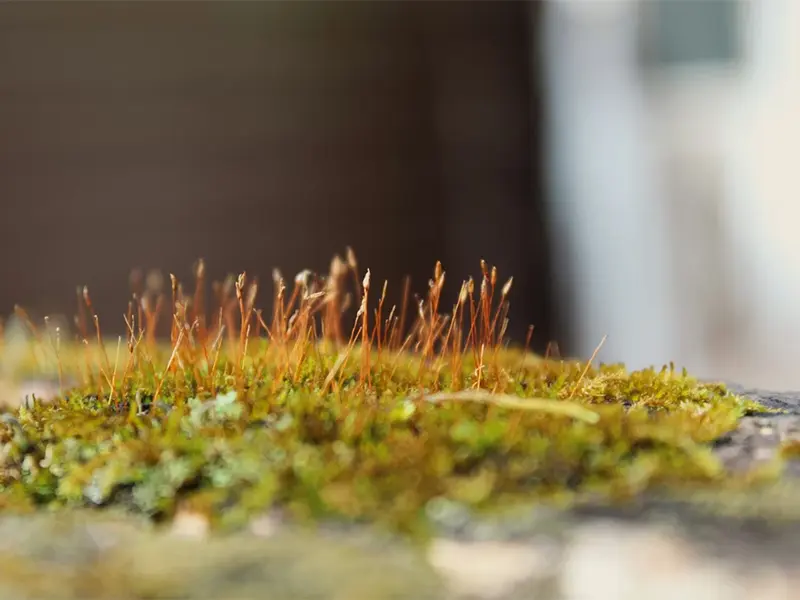
If moss and/or lichen is growing on your roof, it’s a clear sign that it needs some TLC.
Both flat and tiled roofs can be affected by this issue, and it isn’t just older buildings that are at risk.
Roof repairs aren’t cheap, and although a little moss growth may not seem like a big deal, it can cause major damage or even affect the heat retention of your home, costing you a fortune in the future.
Don’t worry, we’re here to help.
Let us explain how to deal with moss on your roof, and what you can do to prevent future buildup.
Why does Moss Grow on Roofs?
Over time, leaves, mud, and other natural debris are blown up onto your roof.
This is most common if there are trees nearby, but can happen to any roof after some stormy weather or high winds.
This layer of mud and leaves creates the perfect breeding ground for moss, which thrives in damp conditions.
It grows quickest if your roof is in the shade, a common issue for the flat roofs on extensions, but can happen on any type of roof.
If you’re also having issues with drainage (which can also be caused by a buildup of debris) or if the weather has been particularly humid, moss will grow even faster.
Lichen grows in similar conditions to moss, and the two are indistinguishable until you’re up close.
While moss is a plant, lichen is a more complex living organism – a symbiotic relationship between a fungus and an algae.
But you’re not here for a biology lesson; all you need to know is that both moss and lichen can cause major damage to a roof if left unchecked.
Why you Shouldn’t Ignore Moss on your Roof
A mossy roof isn’t just an eyesore.
Your roof is designed to direct water down towards your guttering, keep the heat in during cold periods, and ensure your home stays dry.
If you allow your roof to become covered up, it will no longer be doing its job.
Moss growth can be a sign of poor drainage, as the standing water is the perfect food for moss, especially if there is leaf litter and mud to go with it.
This can cause major issues, as water can seep between roof tiles, or make a flat roof start to sag.
Both will cause leaks, damp, and potentially even a collapse, so you need to keep an eye on your roof if rainwater isn’t draining properly.
The moss itself can do damage too.
It will hold moisture, keeping it in contact with your roof tiles, or flat roof lining.
Although waterproof, these materials are not designed to handle standing water for a long time, and the moisture will eat away at the surface itself and the more vulnerable joinery.
If the moss is thick enough, it can even lift up roof tiles or flashing, allowing rainwater free access to the unprotected parts underneath.
If you’re trying to save money on your bills this winter, moss on your roof will make this tough.
Although it can look like a green blanket, it will in fact prevent your roof from holding in heat, so you’ll see your heating bills skyrocket.
Last but certainly not least, moss is not the only living thing you’ll find on a worn-out roof.
We don’t mean bird nests in your gutters either; insects love to eat moss, and will make themselves at home as soon as it starts to grow.
But one thing they love to eat even more than moss is the wooden supports holding your roof up.
If they gain access, it’ll be a difficult and expensive fix.
Birds and other wildlife might come looking for those bugs too.
Pecking or pulling up moss will expose more weak spots in your roof, and the bits they remove will quickly clog your gutters because of how absorbent it is.
Safe to say, moss can cause a lot of issues.
So if you notice any, you need to remove it ASAP.
But doing it yourself is tough, and this time of year it’s even tougher.
That’s why you need a professional roof cleaning.
Moss Removals for your Roof
Our roof cleaning service does much more than polish a few tiles.
If your roof is covered with moss, we have the tools and experience to remove it properly.
Some contractors will just tear up the moss and leave it at that.
But we know that being careless can cause even more damage.
That’s why we’re careful when removing all moss and debris, so that your roof is kept as intact as possible.
As we said, moss growth creates weaknesses in your roof.
We’ll have a close look at where it was growing when we remove it and identify any issues so you can address them.
Just removing the moss and giving the roof a clean will help with some issues, but if it was bad enough there will be more work to do.
We’ll give you our professional opinion and may even be able to help with the repairs.
Just one more way we go the extra mile.
Preventing Moss Growth on your Roof
Once the moss has been removed from your roof, and there is no longer any damage, there’s still one thing that we recommend to stop it coming back after another year.
Our thermal roof treatment has a number of benefits, including:
- Better insulation
- More kerb appeal
- Improved drainage
But on top of all that, a coated roof will also repel moisture and debris, so mould will be less of an issue, if it’s able to grow at all.
If you have a flat roof, or it’s in shade for most of the day, this is an essential addition if you want to save money in the long run.
Speaking of money, our roof treatment is a much cheaper alternative to a brand-new roof.
You can make it look better than new, and have all the benefits we listed, but at a fraction of the roof.
And as an added bonus, it’ll take a lot less time to complete.
If this sounds like something your roof needs, or if you want to get the moss taken care of, please don’t hesitate to get in touch. We look forward to hearing from you.